
Eating healthy in college on a tight budget feels impossible. Between rising grocery prices, a tiny dorm kitchen (or none at all), and the siren call of $2 tacos at 1 a.m., most students assume good nutrition costs good money. It doesn't. In this guide, you'll learn how to build a realistic $50-a-week healthy eating plan: which cheap staples to buy, a sample grocery list that actually adds up, a 7-day meal template, and dorm-friendly cooking tricks for students with nothing but a microwave.
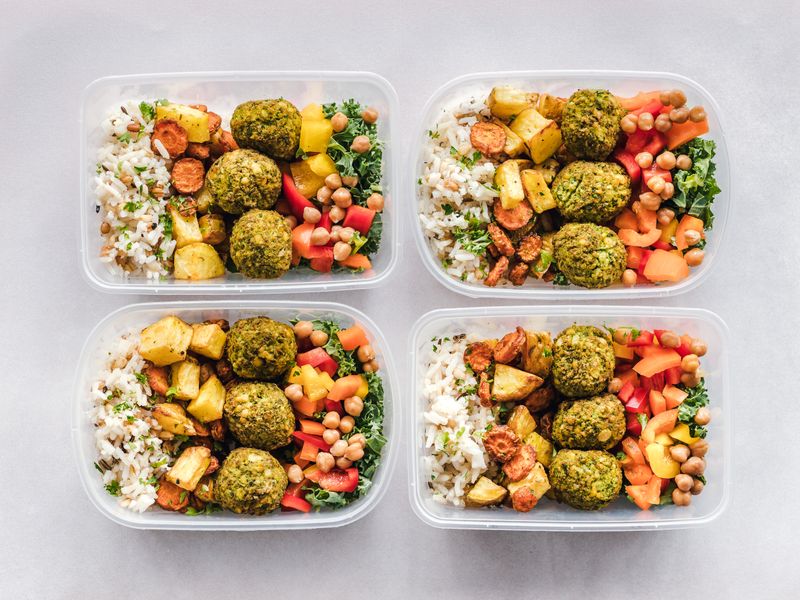
Is $50 a Week Actually Realistic?
Let's be honest: $50 a week is ambitious. According to the USDA's August 2026 Thrifty Food Plan — the federal benchmark for a basic nutritious diet — an adult between 20 and 50 needs roughly $58.50 to $73.60 per week for food, and the USDA recommends adding another 20% for a single-person household since you can't buy in bulk as efficiently. So $50 is below the official benchmark.
But here's the catch: the USDA numbers assume typical shopping habits. If you're strategic — buying store brands, leaning on cheap whole foods like oats, rice, beans, and frozen vegetables, and cooking most meals yourself — $50 a week is absolutely doable. The average single person actually spends $75 to $120 a week on groceries, which means most of the savings are sitting in the delivery-app orders and impulse snacks you cut.
Think of $50 as a target that forces smart choices, not a hard ceiling. If you land at $55 some weeks, you're still winning.
The 6 Rules of Eating Healthy for $50 a Week
1. Build your meals around cheap staples, not cheap junk
The cheapest healthy foods on the planet are also the most boring-looking: oats, rice, dried beans and lentils, peanut butter, eggs, bananas, frozen vegetables, and chicken breast on sale. A 42-ounce canister of oats costs about $4.39 at Aldi or Walmart and covers breakfast for three weeks. Dried lentils run around $1.92 a pound. Canned black beans are as little as $0.65 a can at Aldi. These foods are filling, nutritious, and shelf-stable.
2. Buy frozen produce instead of fresh
Frozen vegetables are picked at peak ripeness and are nutritionally comparable to fresh — sometimes better, since they don't degrade in your fridge. A 12-ounce bag of frozen mixed vegetables costs about $1.18 at Walmart, while the same amount fresh could be $3 or more and might rot before you eat it. Keep frozen peas, broccoli, spinach, and mixed veg stocked at all times.
3. Never shop hungry, and always shop with a list
This is the single highest-leverage habit in the whole guide. Unplanned grocery runs bleed money. Write the list from your meal template (below), eat a banana before you leave, and buy nothing that isn't on the list except sale items you'd genuinely use this week.
4. Eat what's on sale and in season
Check the store's weekly flyer before you plan. Right now, for example, Aldi is running a fall 2026 price cut with family-pack chicken breast at $1.99 a pound — the lowest since 2022. One good sale can cover your protein for two weeks.
5. Meal prep one day a week
Cook a big batch of rice, roast a tray of chicken, portion frozen veg, and pack lunches for 3 to 4 days on Sunday. Meal prep kills the "I'm too tired, I'll just order" impulse that destroys budgets.
6. Cut the budget killers, not the food
You don't need to skip meals. You need to skip the $6 latte, the $14 delivery order, and the $2 bottled water. Brew coffee in a $15 French press and carry a reusable bottle. That alone can free up $30 to $40 a week for real food.

Your $50 Weekly Grocery List (It Actually Adds Up)
Here's a real basket using typical Aldi and Walmart prices from fall 2026. Prices vary by location, but this template lands right around $50:
- Rolled oats, 42 oz — $4.39
- Long-grain rice, 5 lb — $3.29
- Dried lentils, 2 lb — about $3.84
- Canned black beans, 2 cans — about $1.50
- Peanut butter, 16 oz — $2.29
- Eggs, 1 dozen — about $2.25
- Chicken breast, 3 lb (family pack on sale) — about $6.00
- Frozen mixed vegetables, 3 bags — about $3.54
- Frozen broccoli, 1 bag — about $1.25
- Bananas, about 3 lb — about $1.47
- Carrots, 2 lb bag — about $1.00
- Onions, 3 lb bag — about $2.00
- Canned diced tomatoes, 2 cans — about $2.00
- Flour tortillas, pack of 10 — about $2.50
- Milk or oat milk, half gallon — about $2.50
- Apples, 3 lb bag — about $3.50
- Rough total: about $43 to $48 — leaving a few dollars of buffer for a spice, hot sauce, or a second round of bananas midweek.
The trick is that many of these (oats, rice, peanut butter, spices) last multiple weeks, so your second and third weeks often come in cheaper.
A 7-Day Healthy Meal Template
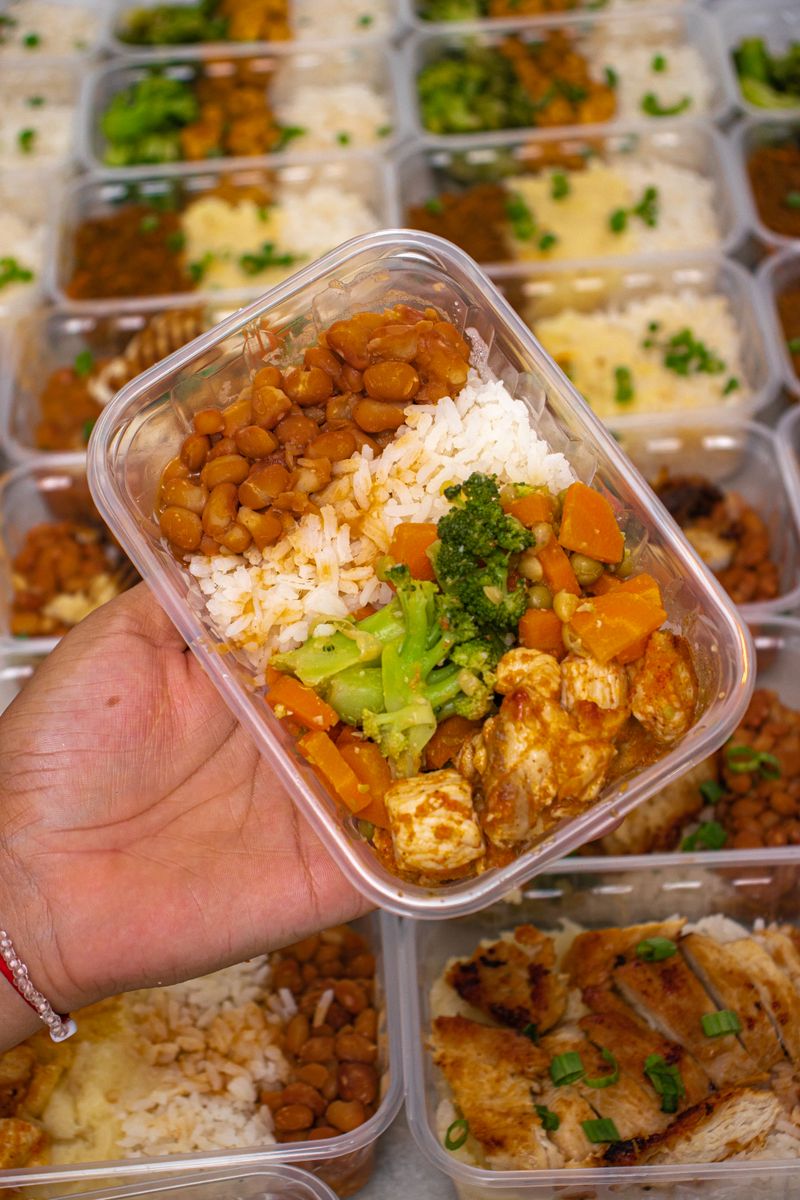
You don't need 21 different recipes. You need one rotating template so cooking stays automatic:
- Breakfast (every day): Overnight oats — oats + milk + peanut butter + sliced banana, made in a jar the night before. About $0.75 per serving.
- Lunch (Mon/Wed/Fri/Sun): Rice and bean bowl — rice, black beans, frozen veg, diced onion, and a spoonful of canned tomatoes. About $1.50 per serving.
- Lunch (Tue/Thu/Sat): Egg and tortilla wrap — 2 scrambled eggs, frozen spinach, tortilla. About $1.25 per serving.
- Dinner (rotating): Chicken + veggie plate, lentil soup (lentils + onion + carrots + canned tomato), or chicken fried rice using leftover rice.
- Snacks: Banana, apple, handful of oats toasted with peanut butter, or a hard-boiled egg.
Per-day food cost: roughly $5 to $6.50. Weekly total: $35 to $45 in actual ingredients, with the buffer covering coffee, spices, and the occasional splurge.
No Kitchen? No Problem (Dorm-Friendly Cooking)
Plenty of students only have a microwave and a mini-fridge. You can still eat well:
- Microwave rice bowls: Microwaveable rice cups (or a cheap microwave rice cooker, about $10) plus canned beans and frozen veg.
- Omelet in a mug: 2 beaten eggs + frozen spinach + a pinch of salt, microwaved 90 seconds, stirring halfway.
- Lentil "soup": Red lentils cook in a microwave rice cooker in about 10 minutes with water, an onion, and canned tomato.
- Overnight oats: Zero cooking at all — oats, milk, peanut butter, fruit in a jar overnight.
Watch this dorm-friendly meal prep walkthrough — every recipe is microwave-only:

Stop Wasting Food — It's Money in the Trash
Americans waste roughly a third of the food they buy. On a $50 budget, that's $16 of every $50 gone. The fixes are simple:
- Freeze bread, tortillas, and half of any chicken you cook — thaw portions as needed.
- Cook the oldest food first; keep a "eat me first" shelf in the fridge.
- Make fried rice, soup, or stir-fry at week's end with whatever's left — it's designed for leftovers.
- Buy shelf-stable staples in the biggest size you can store, and fresh stuff in small amounts.
Frequently Asked Questions
Is $50 a week really enough for a healthy diet?
Yes, with planning. The USDA's Thrifty Food Plan puts a basic nutritious weekly diet at $58.50 to $73.60 for adults aged 20 to 50, so $50 requires discipline — store brands, cheap staples like oats, rice, beans, and eggs, and almost no eating out. It's a stretch goal, not a deprivation diet, and landing anywhere under $60 a week still beats the average student's spending.
What if my dorm doesn't allow cooking?
Stick to no-cook and microwave meals: overnight oats, peanut butter sandwiches, canned bean salads, microwave rice bowls, mug omelets, and lentil soup. A microwave rice cooker (around $10) unlocks rice, lentils, and steamed vegetables.
How do I get enough protein on this budget?
Easily. Eggs (about $2 a dozen), chicken breast (about $2 to $3.50 a pound, less on sale), dried lentils (about $1.92 a pound), canned beans, and peanut butter are among the cheapest protein sources that exist. A day of oats, two eggs, chicken, and lentils lands around 100 grams of protein for under $4.
What about eating out with friends?
Budget for it instead of pretending it won't happen. Keep a $5-to-$8 "social food" line in your weekly spending and pick cheap spots — happy hours, food trucks, and splitting appetizers. One $8 meal out per week still keeps you near $50 to $55 total.
Which stores are cheapest for a student grocery run?
Aldi and Walmart consistently undercut everyone else on staples — oats, rice, beans, peanut butter, eggs, and frozen vegetables are all cheapest there in fall 2026. Ethnic grocery stores are often even cheaper for rice, lentils, spices, and produce. Buy store brands everywhere; the national-brand premium on these basics runs 30 to 60%.
The Takeaway
Eating healthy in college on $50 a week isn't about willpower — it's about having a system. Anchor your diet on a handful of cheap, nutritious staples (oats, rice, beans, lentils, eggs, peanut butter, frozen vegetables, bananas), shop Aldi or Walmart with a list, prep one day a week, and kill the delivery-app habit. That's the whole formula. You won't eat like royalty, but you'll eat well, stay healthy, and still have money left for the things that make college fun.


0 Comments